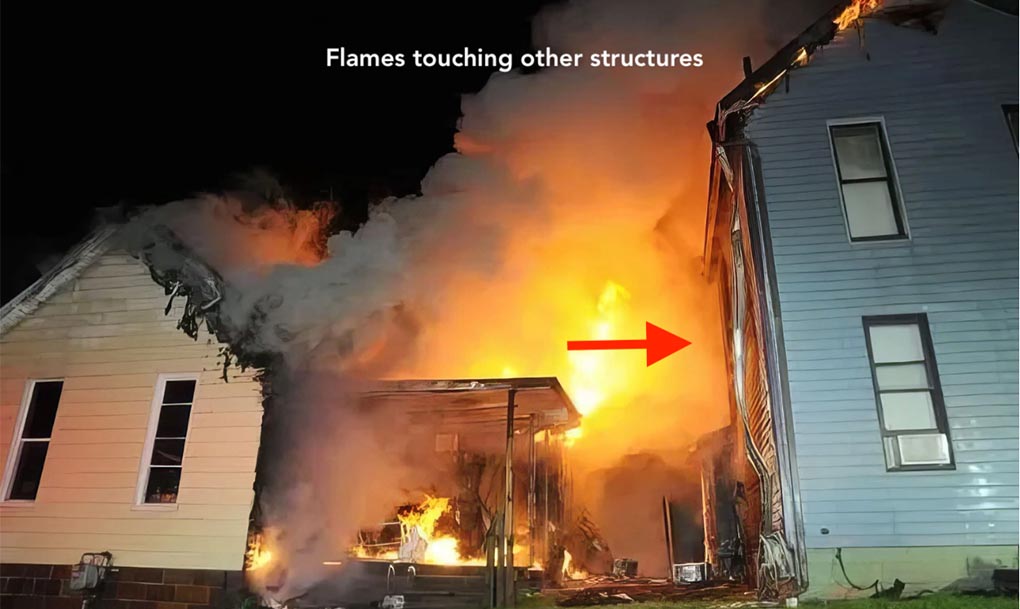
Most homes do NOT ignite from direct contact with the Fire Front
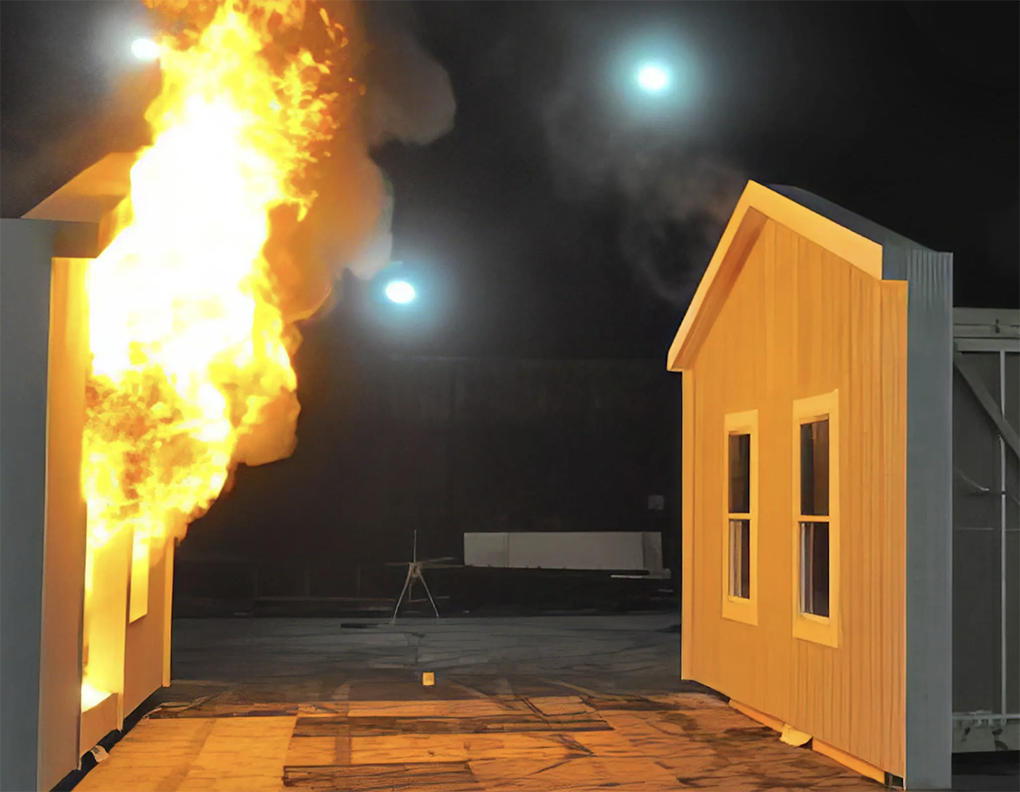
The biggest misconception about home loss from wildfires is that they are ignited as the main body of fire passes through. The reality is the main flame front moves through any area very quickly (1 to 10 minutes, depend depending on the vegetation type). Homes are usually lost as a result of small fires catching hold in and around the building and expanding from there.
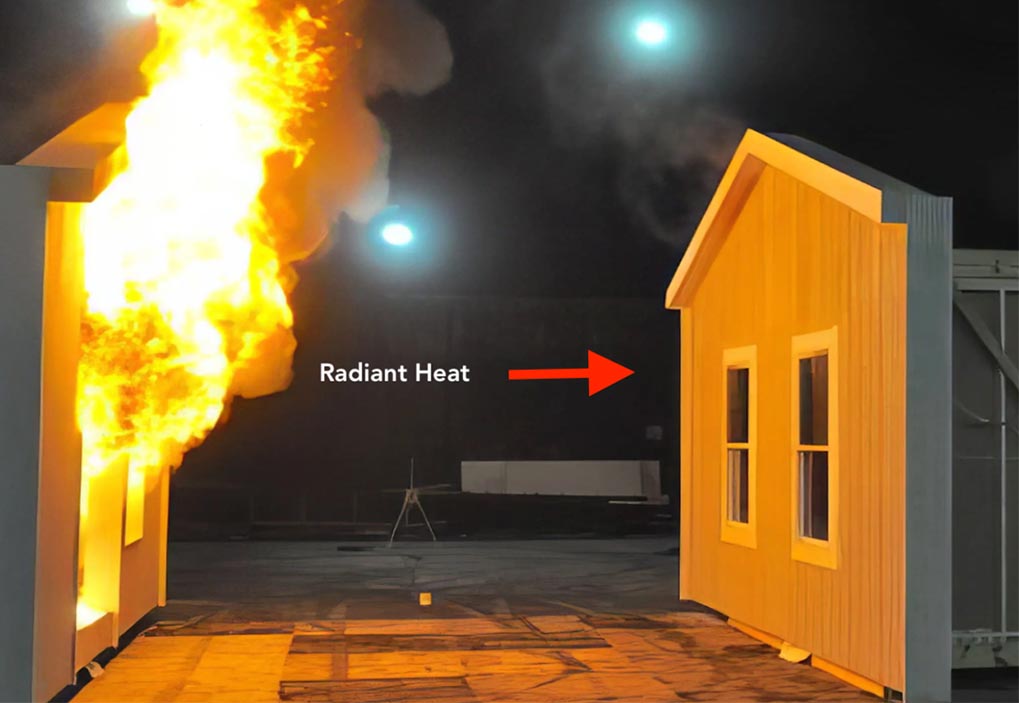
RADIANT HEAT
Lesser known but significant factor
If the fire is close enough to combustible material of the radiant heat is high enough, an ignition will likely result. Even if the radiant exposure isn’t large enough to result in ignition, it can prevent surfaces and make them more vulnerable to ignition from a flame contact exposure.
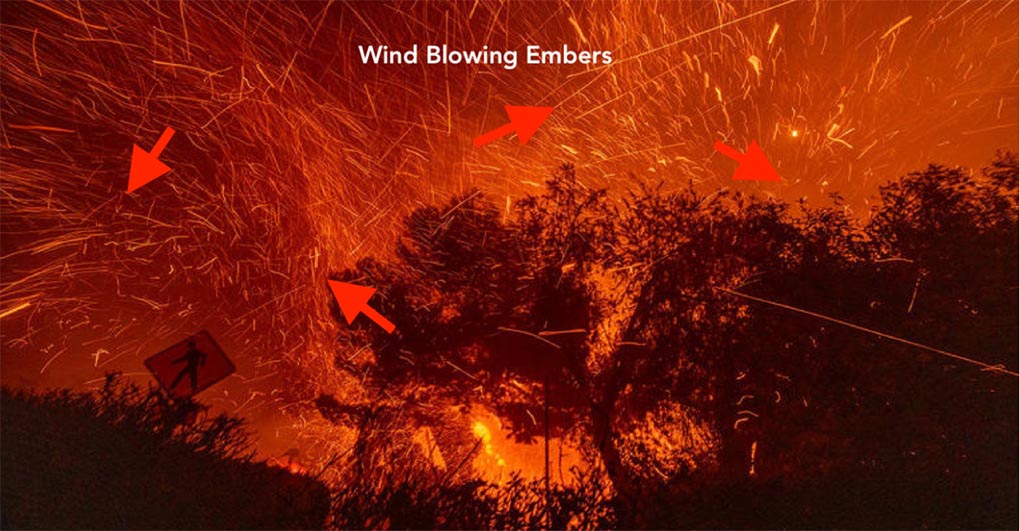
FLYING EMBERS
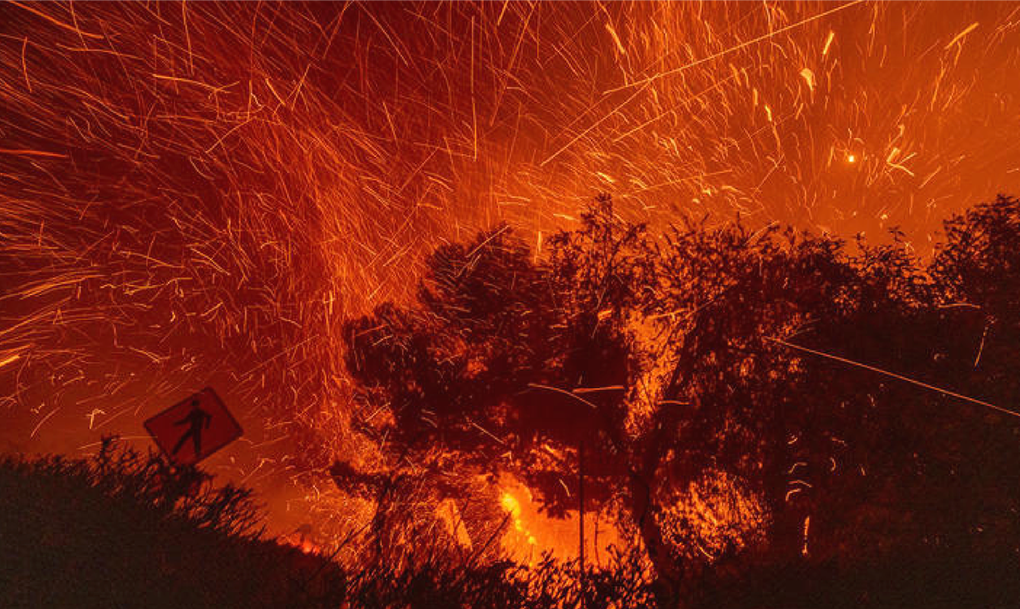
Up to 90% of all home wildlife losses are ignited by Flying Embers
Embers are the most common cause of home ignition. The intense heat from wildfires creates its own wind system. Embers are light enough to be blown through the air and can result in the rapid spread of wildfire. Should these embers land on or near your home, they can ignite nearby vegetation, accumulated debris in your gutters, or entered the home through opening such as vents and under eaves.